Lawn Care
Why Your Oklahoma Lawn Still Needs Feeding in November
Fantastic Lawn • November 2026 • Oklahoma City Metro • 7 min read
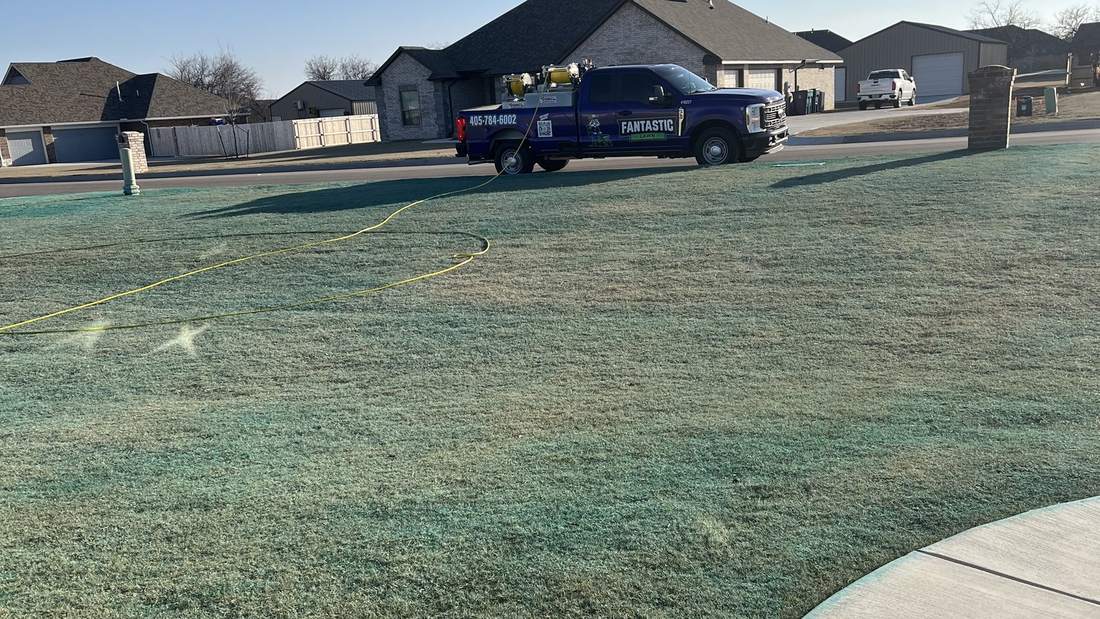
Short Answer: November feels like the end of the lawn season because the grass stopped growing, and that is exactly why the application matters. Growth above the soil line slows or stops, but root activity continues in Oklahoma soil long after the blades go dormant. A late season feeding is absorbed and stored as root reserves rather than pushed into top growth, which is what fuels green up when soil temperatures rise in spring. Skipping it does not kill a lawn. It simply means your lawn spends April rebuilding what it could have banked in November. Here is what is actually happening underground.
There is a moment every November when the mower goes into the shed and the lawn stops being something you think about. The grass has gone brown or slowed to nothing, the leaves are mostly down, and it feels reasonable to assume the work is finished until March.
We understand the logic completely. It is also the single most expensive assumption homeowners in the Oklahoma City metro make about their lawns, and the cost does not show up until spring when the yard that skipped its late applications is still patchy in April while the neighbor's has already filled in.
Here is what is actually going on under a dormant lawn, and why this month is one of the highest value windows of the entire year.
Dormancy Is Not the Same as Death
The first thing worth clearing up is what dormancy actually means, because the word gets used as if the lawn has shut down entirely.
When bermuda goes brown in the fall, what you are seeing is the plant withdrawing resources from the leaf tissue and moving them into the crown, stolons, and root system. The top growth is being abandoned on purpose. The living part of the plant is still there, still respiring, and still drawing on stored energy to stay alive through the cold.
That stored energy is the entire game. A lawn that enters winter with full reserves has what it needs to survive cold stress and then to push aggressive new growth the moment conditions allow. A lawn that enters winter depleted spends the first weeks of spring simply recovering rather than growing, and that lag is exactly the difference people notice between one yard and the next in April.
Roots Stay Active Longer Than You Think
Here is the part that surprises most homeowners. Soil temperature lags air temperature considerably, and root activity is governed by soil temperature rather than by what the thermometer on your porch says.
In the Oklahoma City metro, we routinely have air temperatures dropping into the 30s at night while soil at root depth is still holding well above that. Roots continue taking up water and nutrients in that range even when nothing visible is happening above the surface. That window stays open for weeks after the lawn has gone brown.
This is why a late season application is not wasted on a dormant lawn. The nutrients are not sitting on the surface waiting for spring. They are being taken up and converted into the carbohydrate reserves the plant will live on until it breaks dormancy.
It is also why the timing matters in both directions. Applied too late, after soil temperatures have genuinely dropped and root uptake has stopped, the same product does considerably less good.
Why the Formulation Changes This Time of Year
A late season feeding is not simply your summer fertilizer applied in cold weather. The ratio matters, and it matters for a specific reason.
Through the growing season, nitrogen drives the top growth that produces the dense green lawn you want to look at. Heading into dormancy, pushing top growth is the last thing you want. New tender growth going into a hard freeze is vulnerable tissue that the plant will simply lose, and producing it costs the plant reserves it should be storing.
Potassium is what changes the picture. It is directly involved in cell wall strength, water regulation within the plant, and cold hardiness, which makes it the nutrient that matters most as a lawn heads into winter stress. A late season application weighted toward potassium supports the plant's ability to survive the cold rather than pushing growth it cannot afford.
The result is a lawn that comes through winter with less desiccation, less cold injury, and better reserves than one that was either unfed or fed the wrong ratio at the wrong time.
What This Actually Looks Like in April
The return on a November application is not visible in November, which is the honest difficulty in explaining it. The whole benefit is deferred.
What we see across the properties we service is a consistent difference in green up timing and uniformity. Lawns that received proper late season nutrition break dormancy earlier and more evenly. Lawns that skipped it green up in patches, with the strongest areas coming in first and the thin or stressed areas lagging well behind, which is exactly when homeowners start calling about spots they thought were fine last year.
There is a compounding effect too. A lawn that greens up earlier and denser in spring shades the soil sooner, which suppresses weed germination, which reduces the weed pressure you are fighting through the summer. A lawn that comes in late and thin gives weeds an open window at precisely the moment they are most aggressive.
None of this is dramatic in a single season. Across three or four years of consistent late season feeding, the difference between a lawn that got it and one that did not is substantial.
Common Objections We Hear, and Honest Answers
A few things come up almost every November, and they deserve straight answers rather than a sales response.
The most frequent is that the lawn is brown, so why pay for a treatment on something that looks dead. The answer is that you are not treating what you can see. You are feeding the root system and crown that will produce next year's lawn, and that system is very much alive.
The second is the concern that feeding now will push growth that gets killed by a freeze. That is a legitimate worry and it is exactly why the formulation shifts away from heavy nitrogen at this point in the season. Applied correctly, a late season feeding supports hardiness rather than pushing vulnerable new growth.
The third is whether it can just be done in early spring instead. It can, and spring applications have their own value, but they are a different tool doing a different job. Spring feeding supports growth that is already happening. Late season feeding builds the reserves that determine how strong that spring growth is in the first place. One does not substitute for the other.
Where Pre-Emergent Fits Into the Same Visit
Late season nutrition is usually not the only thing happening on your lawn this time of year, and the other half of the work is arguably just as important.
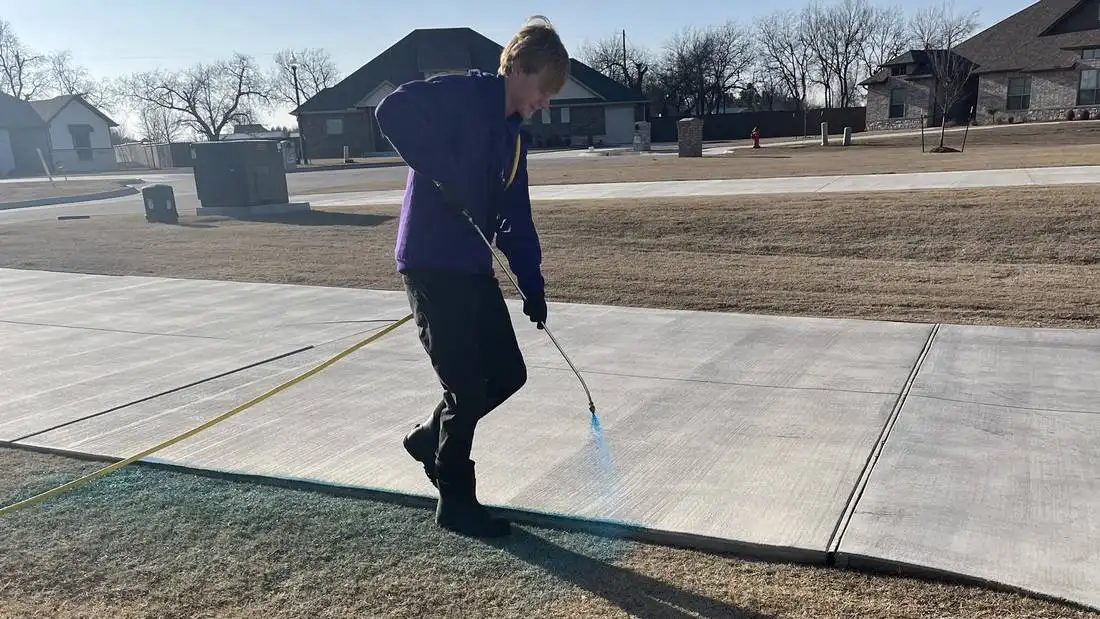
Winter annual weeds germinate as soil temperatures fall, which means the weeds that will be visible and obvious in your lawn in February and March are germinating right now. Pre-emergent applied at the correct point in the fall prevents that germination before it happens, which is the only genuinely effective way to handle those weeds.
The pairing is deliberate. The same visit that feeds the root system also puts the barrier in place that keeps your spring lawn from coming out of dormancy into a field of weeds. Handling both at once is more efficient for everyone and it means both are done at the right point in the season rather than whenever someone got around to it.
We cover the pre-emergent side in more depth separately, because the timing question there is genuinely its own subject.
What to Do Next
If your lawn has gone dormant and you assumed the season was over, this is the month to reconsider that. The window for late season feeding in the Oklahoma City metro is open now and closes when soil temperatures drop far enough that root uptake stops, which is sooner than most people expect.
If you handle your own lawn care, look for a formulation weighted toward potassium rather than the high nitrogen product you would use in June, and get it down while the soil is still workable and root activity is still happening.
If you would rather have the timing decisions and product selection handled for you, we serve the Oklahoma City metro and we are happy to look at your specific lawn and tell you what it actually needs heading into winter. Visit fantasticlawn.com to request a quote.
The lawns that look best in April are almost never the ones that got the most attention in April. They are the ones that were set up correctly in November.