Lawn Care
The Five Fall Lawn Mistakes We See Most in the Oklahoma City Metro
Fantastic Lawn • November 2026 • Oklahoma City Metro • 7 min read
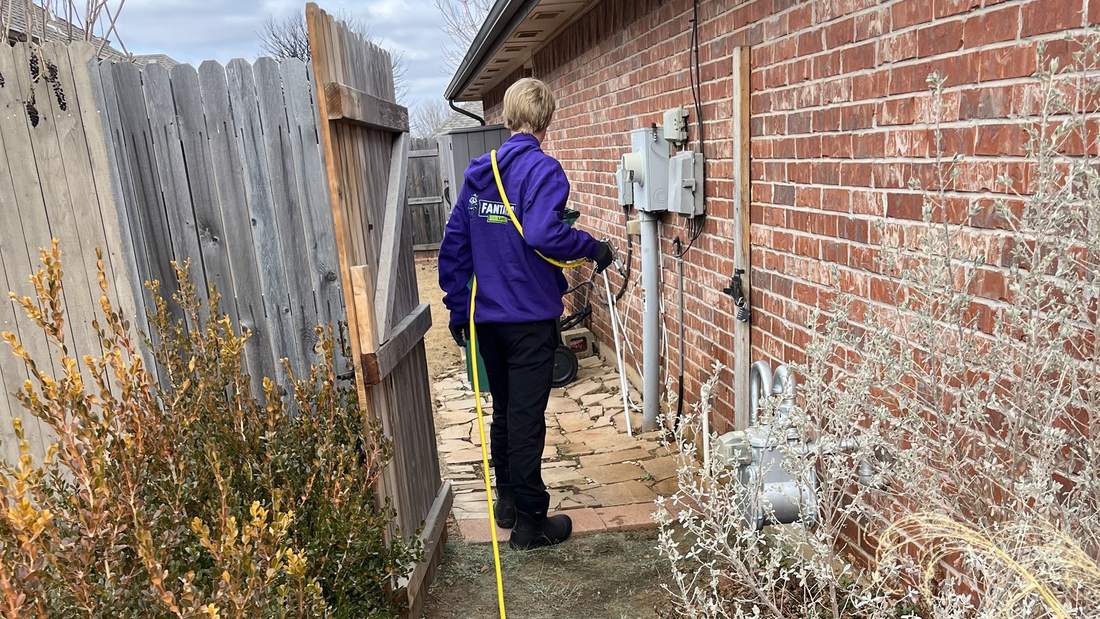
Short Answer: The same five fall mistakes account for most of the spring problems we get called about: stopping fertilization when growth stops, missing the pre-emergent window and then treating weeds in February instead, scalping the final mow in the belief that short grass overwinters better, leaving leaves on the lawn long enough to mat, and running the irrigation on a summer schedule into cold weather. None of them are dramatic and none of them kill a lawn outright. All five show up in April as slower green up, thin areas, and weeds. Here is each one and the fix.
We walk a lot of properties in the Oklahoma City metro this time of year, and after enough of them the spring problems stop being surprising. A homeowner calls in April about a lawn that is patchy, slow to green up, and full of weeds, and the causes almost always trace back to decisions made or skipped the previous fall.
That is actually good news, because it means these are preventable rather than inevitable. Every one of the five below is something you can address in an afternoon or with a single correctly timed application.
Here is what we see most, why it matters, and what to do instead.
One: Stopping Fertilization Because Growth Stopped
This is the most common and the most costly. The lawn stops growing, the mower goes away, and the reasonable conclusion is that feeding season is over too.
What that misses is that root activity continues well after top growth stops, because roots respond to soil temperature and soil temperature lags air temperature by a considerable margin. Nutrients applied during that window are taken up and stored as reserves rather than pushed into growth, and those reserves are what fuel spring green up.
The lawns that green up first and most evenly in April are consistently the ones that got fed late in the previous season. The lawns that come in patchy are consistently the ones where feeding stopped in September.
The fix is a late season application weighted toward potassium rather than nitrogen, applied while the soil is still workable and root uptake is still happening. You are not feeding the part you can see. You are feeding what produces next year's lawn.
Two: Missing the Pre-Emergent Window and Treating Weeds in February Instead
Every February we get calls about weeds that appeared out of nowhere. They did not appear out of nowhere. They germinated in the fall and simply got large enough to notice.
Winter annual weeds germinate as soil temperatures fall, which means the barrier that prevents them has to be in place before that happens. Pre-emergent applied after germination does nothing about the plants already through, which turns a prevention job into a much harder removal job.
The February version of this problem is worse than it looks. Those weeds are actively growing at a point when dormant bermuda is not competing at all, and they are producing seed that lands in your soil for next year.
The fix is getting the fall application down on time, which means tracking soil temperature rather than picking a date. If the window has passed this year, a late winter post emergent will handle what got through, but plan to start the conversation earlier next fall.
Three: Scalping the Final Mow
There is a persistent belief that cutting the lawn very short before winter is beneficial, and it causes real damage every year.
The reasoning usually offered is that short grass will not mat down under snow and is tidier through the winter. The actual effect is that scalping removes the canopy that buffers temperature at the soil surface and exposes the crown, stolons, and rhizomes to cold and to the drying wind that Oklahoma winters deliver reliably.
On bermuda, the final cut should leave the lawn at its normal height rather than taken down hard. On fescue, it should go into winter taller than its summer height, because fescue is still photosynthesizing on mild days and needs the leaf area.
The related fix is to stop mowing in the day or two before a forecasted hard freeze. Freshly cut grass is stressed grass, and stressing the lawn immediately before cold increases the injury you find in spring.
Four: Letting Leaves Sit Long Enough to Mat
This one sounds cosmetic and is not. We repair the damage from it every spring.
A light scattering of leaves is harmless and mulching them with the mower actually returns organic matter to the soil. The problem is volume and time. A heavy layer of whole leaves, wet from rain and pressed down by its own weight, blocks light, traps moisture against the crown, and creates exactly the conditions that fungal disease needs.
Areas that spend the winter under matted leaves come out of dormancy as dead patches that need repair, and on bermuda that repair takes most of the following season because the lawn has to spread back into the space.
The fix is not perfection. It is simply not letting heavy accumulation sit for more than a week or so. Mulch what the mower can handle, remove what it cannot, and do a final clearing after the trees are actually bare rather than partway through the drop.
Five: Running Summer Irrigation Into Cold Weather
Controllers get set in the spring and then nobody touches them, which means a schedule built for July is frequently still running in November.
Overwatering a lawn heading into dormancy wastes water and money, and it also causes problems. Saturated soil combined with cool temperatures is favorable for fungal disease, and the lawn simply is not using water at anything like its summer rate once growth has slowed.
Dormant bermuda needs very little supplemental water through the winter. Fescue is the exception and genuinely benefits from watering during extended dry, windy stretches, because it is still active and can suffer desiccation injury. Those are different needs and they call for different handling.
The other half of this is the system itself. Water left in irrigation lines when a hard freeze arrives cracks fittings and damages valves, and the repair is far more expensive than the winterization would have been. That work needs to happen before the first hard freeze rather than after the forecast shows one coming.
The Pattern Underneath All Five
Step back and these are all versions of the same mistake, which is treating the visible growing season as the whole season.
The lawn stops looking like it needs attention, so attention stops. But the period between the last mow and spring green up is when root reserves are built, when weed pressure for the next year is decided, and when winter injury either happens or does not. None of that is visible while it is happening, and all of it is visible in April.
That deferred feedback is genuinely the hard part. There is no satisfying moment where the November work pays off in front of you. The payoff arrives four months later as a lawn that greened up early and evenly and did not need fixing.
The homeowners with consistently good lawns in this metro are not the ones doing dramatic things in the spring. They are the ones who did unremarkable things at the right time the previous fall.
What to Do Next
Run through the five and see which apply to you. Has the lawn been fed since September. Did pre-emergent go down this fall. What height is the final mow leaving it. Are leaves sitting on the turf right now. Is the controller still running a summer program.
Most homeowners find two or three of the five apply, and most of those are fixable in the next couple of weeks. Adjusting the controller costs nothing. Clearing leaves costs an afternoon. Raising the final mowing height costs nothing at all.
The two that are genuinely time sensitive are the late season feeding and the pre-emergent, because both have windows tied to soil temperature that close whether or not you were ready.
If you would rather have the timing handled for you, we serve the Oklahoma City metro and we are glad to look at your lawn and tell you honestly where it stands heading into winter. Visit fantasticlawn.com to request a quote.