Lawn Care
Fall Pre-Emergent in Oklahoma: Why Timing Beats Product Every Time
Fantastic Lawn • November 2026 • Oklahoma City Metro • 7 min read
Short Answer: Pre-emergent does not kill weeds. It creates a barrier in the top layer of soil that stops germinating seeds from developing, which means it only works if it is already in place before germination begins. In the Oklahoma City metro, winter annual weeds start germinating as soil temperatures fall through the 70s in early fall, and the weeds you will see in February germinated months earlier. That is why timing matters more than which product is used. A correctly timed average product outperforms a premium product applied two weeks late, every single time.
If you have ever looked at your lawn in late February, seen it full of small green weeds, and thought you should call someone about a weed problem, we want to save you some frustration. By February that particular battle is already over.
Those weeds germinated in the fall. They spent the winter growing slowly at a size you never noticed, and the warm stretch in late winter simply made them big enough to see. Treating them at that point means killing established plants rather than preventing them, which is harder, less complete, and more expensive.
Pre-emergent is the tool that prevents that, and it is almost entirely a timing question rather than a product question. Here is why.
What Pre-Emergent Actually Does
The name creates most of the confusion, so it is worth being precise about the mechanism.
A pre-emergent herbicide does not kill weed seeds and it does not kill weeds you can see. What it does is establish a treated layer in the top portion of the soil. When a seed germinates and sends out its first root and shoot, that seedling encounters the treated zone and fails to develop. The seed germinated. It simply never emerged.
Two things follow directly from that. First, the barrier has to be in place before germination, because a seedling that has already pushed through is past the point where the product affects it. Second, the barrier is physical and continuous, which means anything that disrupts it reduces its effectiveness. Aggressive raking, aeration, or digging after application breaks the layer and opens a channel.
This is also why pre-emergent and seeding are fundamentally incompatible in the same area at the same time. The product cannot distinguish between a weed seed and grass seed you want. Both germinate, and both fail.
Why Soil Temperature Is the Trigger, Not the Calendar
Every homeowner wants a date, and we understand why. The honest answer is that the date moves every year.
Weed seeds are responding to soil temperature at a shallow depth, not to what the calendar says or what the air temperature has been doing. Winter annual weeds germinate as soil temperatures fall through roughly the 70 degree range, which in the Oklahoma City metro typically happens in early fall but can shift by weeks depending on how the season has run.
A warm, dry fall pushes the window later. An early cool front pulls it earlier. A homeowner applying by calendar date in a year that ran warm applies before the product is needed and loses residual life at the far end of the season. A homeowner applying by calendar date in a year that cooled early applies after germination has already started, which means the product is doing nothing about the weeds that are already through.
This is the single biggest reason professionally applied pre-emergent tends to outperform the same active ingredients applied by a homeowner. Not better chemistry. Better timing, tracked across the season rather than guessed at once.
What Fall Pre-Emergent Actually Prevents
It is worth naming what you are buying, because the benefit is invisible by design.
Fall applications target winter annual weeds, which are the plants that germinate in cool soil, grow slowly through winter, and then become obvious in late winter and early spring. They are the reason a lawn that looked clean in December looks weedy in February before the turf has even started to green up.
That timing is what makes them so frustrating. They get a head start on your dormant lawn, they are actively growing at a point when your grass is not, and they are competing for space and nutrients with no competition from the turf.
Preventing them does more than improve appearance. It means your lawn breaks dormancy into open space rather than into an established stand of competitors, and it means you are not starting the spring with a weed control problem to fix before the real season begins.
Why Product Selection Matters Less Than People Expect
Homeowners frequently ask which product we use, expecting the answer to be the important part. It is a reasonable question with a slightly unsatisfying answer.
The active ingredients commonly used for pre-emergent weed control are well established, widely available, and genuinely effective. There is real variation in residual length and in which weed species a given product handles best, and those differences matter at the margins. They matter far less than whether the product was in the ground before germination.
An average product applied at the right moment prevents the weeds. A premium product applied two weeks after germination has already begun prevents the ones that had not started yet and does nothing about the rest. The gap between those two outcomes is much larger than the gap between any two products applied correctly.
Where product selection does become important is in coordination with other work. If any portion of the lawn is being seeded, the choice of product and the sequencing of applications has to account for that, because the wrong product in a seeded area kills the grass you paid for.
Rate and Coverage Are Where DIY Applications Fail
Beyond timing, the second common failure point is application quality, and it is worth understanding because it is fixable.
Pre-emergent works as a continuous barrier, which means gaps in coverage are gaps in protection. A skipped strip, an uneven spreader pattern, or a section applied at half rate because the product was running low all produce weeds in exactly those places next spring. Homeowners frequently conclude the product failed when what actually happened is that the barrier had holes in it.
Rate matters just as much. Applying below label rate to stretch a bag produces a barrier too weak to stop germination reliably. Applying above rate wastes product, costs more, and in some cases creates problems for the turf.
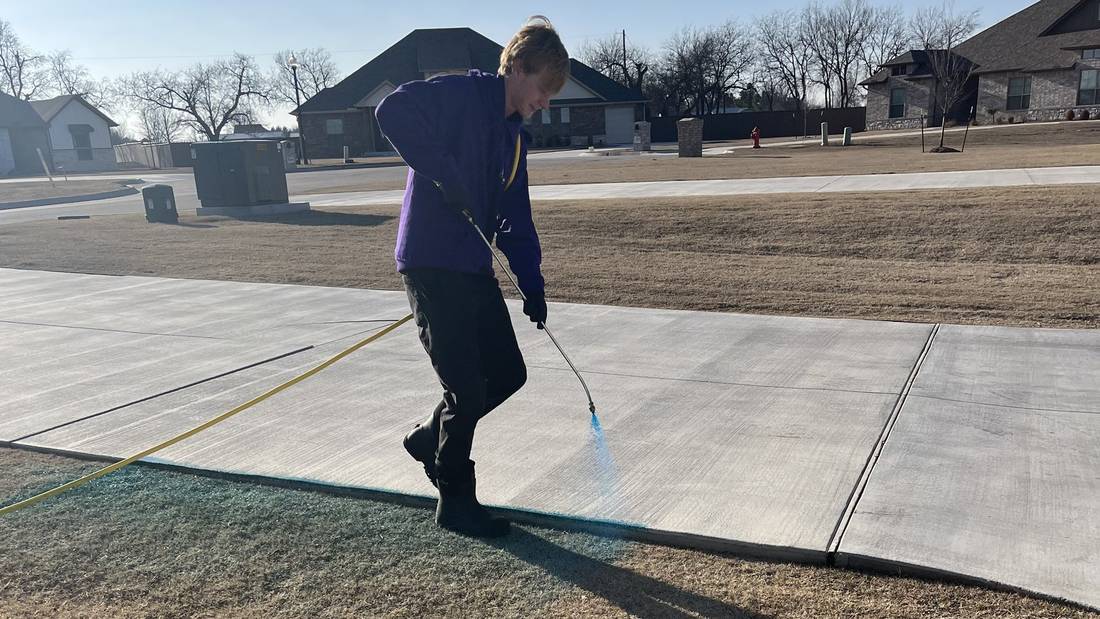
The product also has to be watered in to activate. Pre-emergent sitting on the surface is not doing anything. It needs moisture to move it into the top layer of soil where the barrier forms, which means either timing the application ahead of rain or irrigating afterward.
Why This Sets Up Your Spring Application
Fall pre-emergent is half of a two part strategy, and the halves are aimed at different targets.
The fall application addresses winter annuals that germinate in cooling soil. The spring application addresses summer annuals, most notably crabgrass, which germinate as soil temperatures rise through the 50s on the way up. Same tool, opposite side of the temperature curve, entirely different weeds.
Neither one substitutes for the other. Homeowners who only do the spring application deal with winter weeds every February. Homeowners who only do the fall application deal with crabgrass every July. The lawns that stay consistently clean are on both.
There is also a cumulative effect worth understanding. Every weed that is prevented from emerging is a weed that never produces seed, which means the seed bank in your soil is being drawn down rather than replenished. That is why lawns on consistent pre-emergent programs get easier to maintain over several years rather than staying at the same level of effort.
What to Do Next
If you are reading this in November and have not applied fall pre-emergent, the honest assessment is that some portion of this year's winter annual germination has likely already happened. That does not make the application pointless, because germination occurs over a window rather than all at once, and preventing the later portion still meaningfully reduces what you deal with in February.
It does mean that a post emergent treatment in late winter may be needed to handle what got through, and that next year the timing conversation should start earlier.
If you would rather not track soil temperatures and guess at windows, that is most of what we do. We serve the Oklahoma City metro and we time these applications based on what the soil is actually doing rather than on a calendar. Visit fantasticlawn.com to request a quote.
The homeowners who stop fighting the same weeds every year are rarely the ones who found a better product. They are the ones who got the timing right and then stayed consistent long enough for the seed bank to run down.