Lawn and Pest
Lawn Care Alone or Lawn and Pest Together? How OKC Homeowners Should Decide
Fantastic Lawn • September 2026 • Oklahoma City Metro • 7 min read
Short Answer: Buy lawn care alone if your only real complaint is how the grass looks and you have not had a pest issue in the house. Add pest control when any of four things is true: you have seen the same insect indoors more than once, you have pets or young children using the yard, your property backs onto a creek, field, or wooded easement, or you have had a mosquito or flea season bad enough that you stopped going outside. The combined program is not automatically better value. It is better value when the problems are actually connected, which in this climate they often are.
When we sit down with a new customer, this is the question that comes up most, and it usually gets answered badly by our industry. The standard sales answer is that you should always bundle. The honest answer is that it depends on your property, and we would rather help you decide correctly than sell you a program you do not need.
So here is how we actually think about it.
What Each One Is Really For
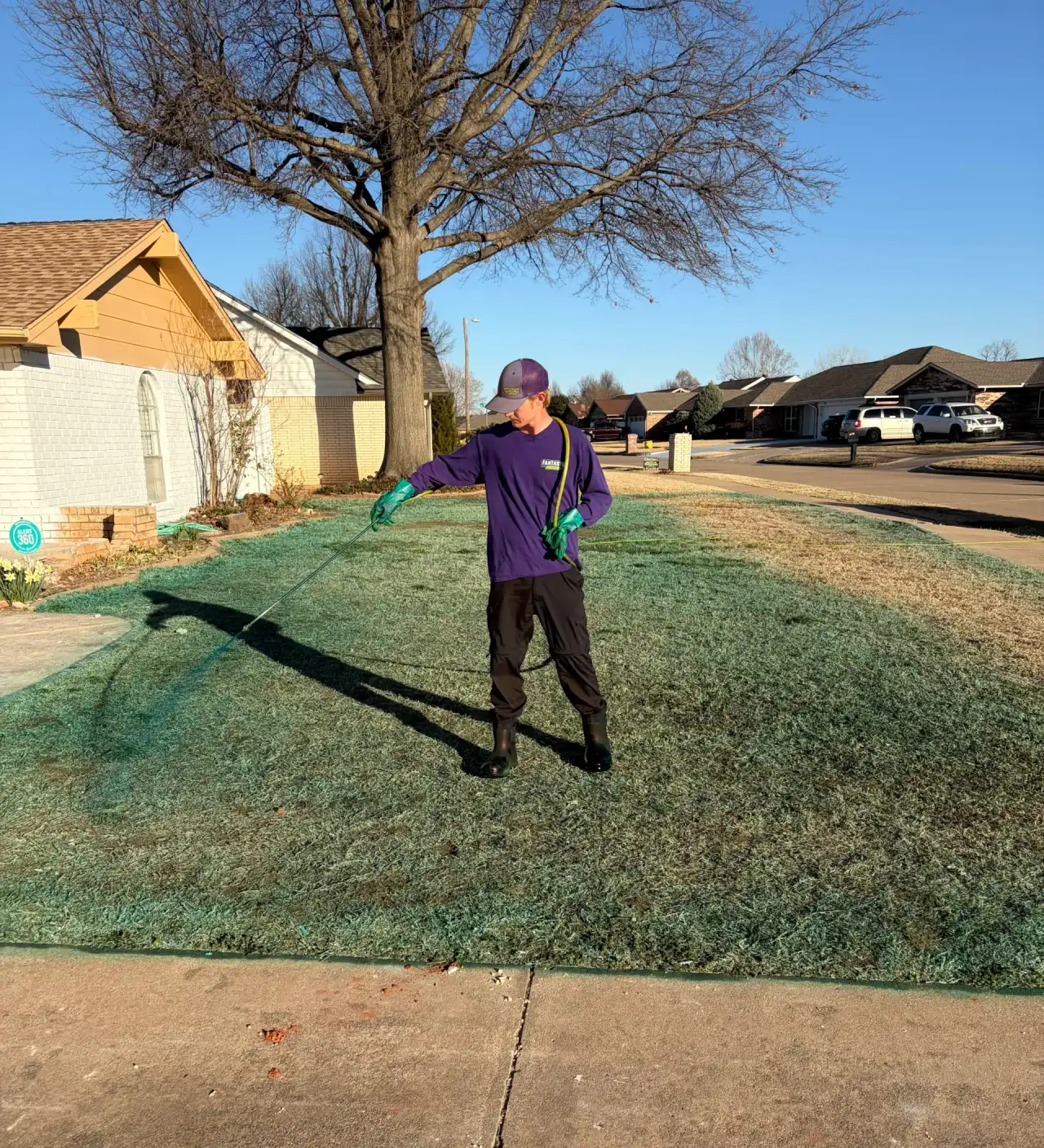
A lawn program is an agronomy program. It exists to make the grass thicker, greener, and more resilient, and to keep weeds out of it. Fertilization on a schedule matched to your turf type, pre-emergent timed to soil temperature, post emergent on what gets through, and usually grub control because grubs are a turf problem rather than a house problem.
A pest program is a structural program. It exists to keep insects and rodents out of the building. Perimeter treatments, attention to entry points, and targeted work on the specific pressures your property has, whether that is mosquitoes, fleas and ticks, roaches, spiders, or mice.
Different objectives, different products, different places on the property. They are not the same service sold twice, and any company that describes them interchangeably is worth a second look.
Four Signals That You Want Both
The first is repetition indoors. One spider in February is a spider. The same insect showing up repeatedly, in the same room, across weeks, is a population with an established route. Repetition is the signal, not quantity.
The second is who uses the yard. Households with dogs, cats, or small children have a genuinely different risk profile, because pets carry fleas and ticks in and kids spend time at ground level in exactly the shaded spots where those things live. This is the most common reason we advise adding pest to an existing lawn program.
The third is what your property borders. A yard backing onto a creek, drainage easement, undeveloped field, or wood line has meaningfully higher pressure than one in the middle of a subdivision, because there is a continuous supply arriving from outside your control. Plenty of metro neighborhoods sit on exactly that kind of edge.
The fourth is whether you stopped using your own yard. If last summer you gave up on the patio because of mosquitoes, that is not a minor inconvenience. You are paying a mortgage on space you are not using.
When Lawn Care Alone Is the Right Call
We would rather say this plainly than let you over buy.
If your house is well sealed, you have not seen anything indoors, you do not have pets, your yard sits mid block away from any natural edge, and your complaint is genuinely that the grass looks thin and weedy, then buy the lawn program. Fix the lawn. Add pest control later if something changes.
The same goes in the other direction. Some properties we visit have a real pest problem and a lawn that is honestly fine. In that case we would rather sell you the pest program and leave the lawn alone than pad an invoice with treatments the turf does not need.
Where the Two Genuinely Overlap
Here is the part that makes a combined program more than a billing convenience.
The insects arriving at your foundation in the fall came out of the landscape around the house. A lawn with heavy thatch, chronic moisture, and no insect pressure management is a reservoir feeding the perimeter of the building. Reduce the reservoir and the perimeter has less to intercept.
Moisture is the shared thread. Overwatering produces shallow rooted turf, encourages fungal disease, and creates exactly the damp shaded conditions that fleas, mosquitoes, and roaches need. One irrigation change frequently improves the lawn and reduces pest pressure at the same time, which is the kind of thing you only notice when the same crew is looking at both.
Then there is the practical benefit of one set of eyes. When the same technician is on the property every few weeks looking at both the turf and the structure, problems get caught early. Grub damage spotted in August, a wasp nest starting under the eave, a downspout dumping against the foundation. Two separate vendors each see half the property and neither owns the overlap.
What the Combined Visit Looks Like on the Ground
People picture a bundle as two crews arriving on the same day. In practice it is closer to one visit with a wider brief, and the schedules only partly line up.
Lawn applications follow the agronomic calendar. Pre-emergent goes down when soil temperature crosses a threshold, fertilization follows the growth curve of your specific turf type, and grub control is timed to the hatch. Those dates are set by the season, not by convenience.
Pest work runs on a different rhythm. Perimeter treatments are generally quarterly with seasonal emphasis, mosquito service runs every three to four weeks through the warm months, and flea and tick work is driven by whatever is actually happening on your property.
Where they line up, we combine the trip. Where they do not, they stay separate, because moving a pre-emergent application two weeks to match a perimeter visit would trade the whole point of the treatment for a small logistical gain. Any company promising that everything happens on one tidy day each quarter is either simplifying for the brochure or compromising the timing.
What you should get from the combined arrangement is continuity rather than a single truck. The same people know your property, your turf type, where the water sits, which corner the dog sleeps in, and which side of the house the crickets favor. That accumulated knowledge is the actual product.
The Money Question, Honestly
Bundled pricing usually does save something over buying two programs separately, because the trip is shared. But that saving is modest, and it is the wrong reason to decide.
The right question is whether you have the problem the second program solves. A discount on something you do not need is not a saving. We would rather you start with one program you are confident about and add the second when there is a reason, than sign up for everything in September and quietly resent the invoice by March.
Ask any company to price the two separately as well as together. If they will not, that tells you something.
Watch the contract length too. Bundles are often where longer commitments and automatic renewals get introduced, because the discount is what pays for locking you in. That is not automatically unreasonable, and on a lawn program there is a genuine agronomic argument for committing to a full year, since a half finished program produces half a lawn. Just make sure you know what you signed, what it costs to leave, and whether the price you were quoted is an introductory rate or the ongoing one.

What to Do Next
Spend ten minutes on two questions. First, walk through the house and think honestly about whether you have seen the same thing more than once in the last few months, and where. Second, stand at the back of your property and look at what borders it.
Those two answers will tell you most of what you need. Repetition indoors or a wild edge outside means pest control is worth carrying. Neither, and no pets, and the lawn program alone is a perfectly sound choice.
If you would rather talk it through with someone who will look at the actual property, that is what we do. Fantastic Lawn handles both lawn care and pest control across the Oklahoma City metro, including Edmond, Norman, Moore, Yukon, Mustang, Midwest City, and Piedmont. Call 405-766-7979 or visit fantasticlawn.com.
Here is what to expect from that visit. We will walk the lawn and the structure, tell you which of the two your property actually needs, and be direct if the answer is only one of them. We would rather start smaller and be right than sell you a bundle you did not need and lose you in the spring.