Lawn and Pest
Fleas and Ticks Do Not Quit When It Cools Off in Oklahoma
Fantastic Lawn • September 2026 • Oklahoma City Metro • 7 min read
Short Answer: Flea populations in Oklahoma typically peak in September and October, not July. A summer's worth of breeding has been compounding, and the mild, humid conditions of early fall are close to ideal for them. Ticks get a second surge in fall as well, and adult lone star and American dog ticks stay active here into November. The reason yard treatments alone often disappoint is that roughly 95 percent of a flea population is eggs, larvae, and pupae living in shaded soil, carpet, and bedding rather than adults on the animal. Breaking the cycle means treating the pet, the house, and the yard in the same window.

If your dog has been scratching more since Labor Day and you assumed flea season was winding down, you are running into one of the most common misconceptions we hear. Most homeowners we talk to think of fleas and ticks as a summer problem that fades with the heat. In central Oklahoma the curve actually runs the other way.
This one matters more than a nuisance, because ticks in our part of the state carry real disease risk for both pets and people. So it is worth understanding why fall is the hard part of the year and what actually works.
Why the Population Peaks Now
Fleas reproduce on a compounding curve. A single female lays something on the order of 40 to 50 eggs a day, and those eggs fall off the animal wherever it walks, spends time, and sleeps. Each generation seeds the next.
What that means practically is that a small population in May, left alone, becomes a very large one by September. The math is doing the work, not the weather. Summer heat and dryness in Oklahoma actually suppress fleas somewhat, because eggs and larvae dry out in baked soil. When the heat breaks and we pick up humidity and rain in September, survival rates jump right at the moment the population is already at its largest.
Ticks follow a different but overlapping pattern. Our lone star tick is most notorious in spring and early summer, but adult ticks become active again in fall, and adult American dog ticks and others stay out well into November. A warm October afternoon in Oklahoma is a perfectly good tick day.
The 95 Percent You Cannot See
This is the single most useful thing to understand about fleas, and it explains nearly every failed treatment we get called in behind.
The adult fleas on your pet are a small fraction of the total population, generally estimated at around five percent. The rest are eggs, larvae, and pupae distributed through the environment: in shaded soil and mulch outdoors, and in carpet fibers, floor cracks, upholstery, and pet bedding indoors.
Picture an iceberg where you can only see the tip and the rest sits below the waterline. Treating your pet removes the visible tip. Within days, more adults emerge from the pupae you never touched and the animal is reinfested, which is why people conclude the product did not work when in fact it worked exactly as intended on the wrong five percent.
The pupal stage makes this worse. Pupae are protected by a cocoon that shrugs off most insecticides, and they can lie dormant for weeks waiting for vibration, warmth, and carbon dioxide to tell them a host is nearby. That is why a house can seem clear and then produce a wave of fleas after a quiet weekend away.
Where They Live in an Oklahoma Yard
Flea larvae avoid direct sun and dry out quickly, so they are not spread evenly across your lawn. They concentrate in specific places, and those places are predictable.
Under the deck. Along the shaded north side of the house. In mulch beds beneath shrubs. Under the porch, in the crawl space, in tall grass along the fence line, and anywhere the dog habitually lies down in the shade. Wildlife matters too: opossums, raccoons, feral cats, and rabbits moving through the yard drop eggs as they go, which is how a home with a strictly indoor pet still ends up with a yard problem.
Ticks concentrate at the edges. Where turf meets tall grass, brush, a wood line, or a fence with vegetation growing through it. Ticks climb vegetation and wait, so an unmaintained boundary is where the risk lives, not the open middle of the lawn.
Why the Tick Half Is the Serious Half
Fleas are miserable. Ticks carry disease, and Oklahoma is not a low risk state for them, so we treat this part of the conversation differently.
The lone star tick, recognizable on the adult female by a single pale spot on her back, is the one people here encounter most, and it is an aggressive host seeker rather than a passive waiter. American dog ticks and brown dog ticks are common across the metro as well. Between them they are associated with several illnesses that affect both dogs and people, and the practical point is that risk scales with how long a tick stays attached. Finding and removing one promptly matters more than almost anything else you can do.
So after any time spent in tall grass, along a fence line, or at a wooded edge, check. Ears, the back of the neck, between the toes, and the armpits on a dog. Hairline, waistband, and behind the knees on people. It takes two minutes and it is the highest value habit in this entire article.
What Actually Breaks the Cycle
Three fronts at once, in the same window. Miss one and the population rebuilds from it.
The pet, handled with a veterinarian recommended product. We are not veterinarians and will not tell you which one to use, but we will say that this piece is not optional and that treating the yard while the animal is untreated is a losing arrangement.
The house, which means thorough and repeated vacuuming, washing all pet bedding in hot water, and paying attention to where the animal sleeps and the edges of rooms. Vacuuming matters more than people expect, because the vibration triggers pupae to emerge where they can be reached.
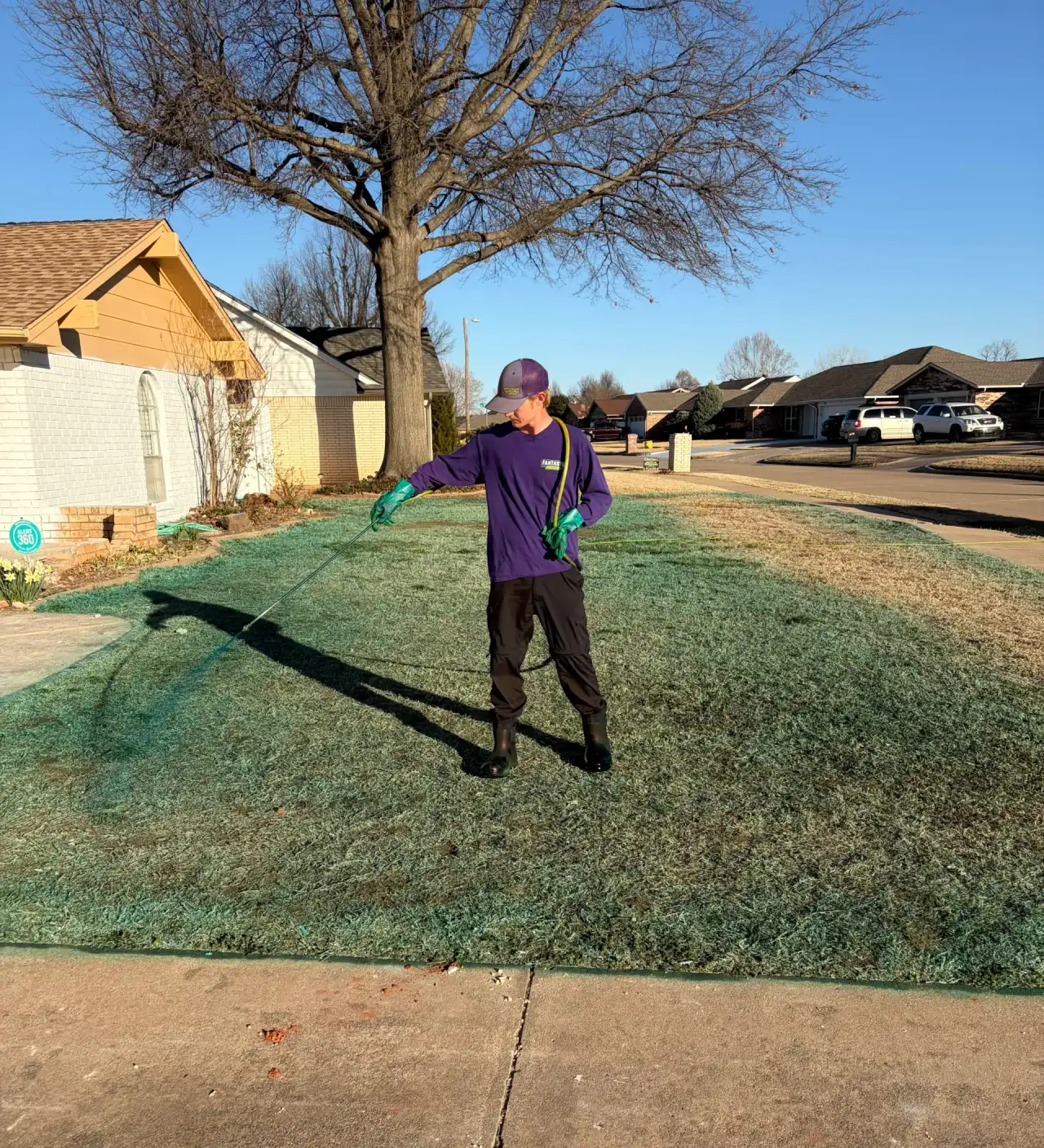
The yard, which means targeted treatment of the shaded harborage areas rather than blanket coverage of open turf, plus mowing, clearing leaf litter, cutting back the fence line, and reducing the brushy edges where ticks wait. Treating the sunny middle of the lawn accomplishes very little.
Because of the pupal stage, one round is rarely enough. Expect a follow up two to three weeks later to catch what emerges after the first.
Pets, Kids, and Reentry
This is the question we get most often, and it deserves a direct answer.
Yard treatments need to dry before pets and children go back out. In practice that is usually a couple of hours, longer in humid or cool weather. Once dry, the treated surfaces are considered safe for normal use. We will tell you the reentry time for what we actually applied on your property rather than a generic figure, and if you have chickens, a pond with fish, or beehives, tell us before we start, because those change what we use and where.
If you would rather we work around a specific area entirely, say so. We would much rather adjust the plan than have you worried about your own backyard.
What to Do Next
Do the white sock test. Pull on tall white socks over your shoes and walk slowly through the shaded parts of the yard, under the deck, and along the fence. Fleas will jump on and show up clearly against the white. It costs nothing and it tells you whether you have a yard problem or a house problem.
For ticks, walk the boundary and note where turf gives way to brush. That transition is your risk zone and usually your best return on an afternoon of trimming.
If you would rather have someone handle the yard side properly and time the follow up, that is what we do. Fantastic Lawn covers lawn care and pest control across the Oklahoma City metro, including Edmond, Norman, Moore, Yukon, Mustang, and Midwest City. Call 405-766-7979 or visit fantasticlawn.com.
Here is what to expect. We will find the harborage areas rather than spraying the whole lawn, tell you plainly that the yard is one of three fronts and that we only control one of them, and schedule the follow up rather than waiting for you to call back frustrated. If your real problem is wildlife traffic through the yard, we will say so, because no treatment schedule out runs a nightly opossum.