Armyworms in Oklahoma: Spotting Them Before They Strip Your Lawn Overnight
Fantastic Lawn • June 2026 • Edmond & Oklahoma City, OK
Short Answer: Fall armyworm infestations can strip a healthy Oklahoma lawn from green to bare ground in 48 to 72 hours. The early warning signs are subtle (small notches in grass blades, increased bird activity, brown streaks that look like sun damage) and easy to miss until the damage is severe. From June through October, walking your lawn for 5 minutes every few days and recognizing the signs is the difference between a quick spot treatment and a full lawn rescue. Once an outbreak is active, treatment within 24 hours is critical.
If you have lived in Oklahoma long enough, you have heard the armyworm horror stories. Lawn looks fine on Saturday. Lawn looks like it was burned with a torch by Monday. The homeowner panics, calls a lawn service, and finds out it was armyworms that moved through overnight. The damage takes weeks to recover from and sometimes requires sod replacement.
We want to walk you through how to spot armyworm activity before the damage is severe, what the early signs look like, and what to do if you find them. This is one of those pests where 24 hours of delay can be the difference between a $100 treatment and a $1,500 rescue.
What Armyworms Actually Are
Fall armyworms are the larvae of a small brown moth (Spodoptera frugiperda) that migrates north from Texas and Mexico each year, with populations peaking in Oklahoma from August through October. The moths lay eggs in masses on grass blades, ornamentals, and even outdoor furniture. Each egg mass contains 50 to 200 eggs. Eggs hatch in 3 to 5 days. The larvae feed for 14 to 28 days, growing from 1/8 inch at hatch to 1.5 inches at maturity.
"Army" in the name comes from their behavior. When a localized food supply is exhausted, the larvae march together to find more, leaving stripped lawn behind them. Adult moths can lay eggs on a single property and produce hundreds of larvae that march across the lawn in waves.
Activity in Oklahoma starts as early as June in some years, ramps up dramatically in July and August, peaks in September, and tapers in October with the first frosts.
Early Warning Signs You Can Spot in 5 Minutes
The earliest sign is the easiest to miss. Walk the lawn in early morning when dew is still on the grass. Look closely at individual blades. Small notches or scalloped edges along the blade margins indicate larvae have been feeding. Healthy lawn has no notches. Notched blades scattered across the lawn mean armyworms are present and growing.
The second sign is bird activity. Robins, starlings, crows, and grackles eat armyworms eagerly. A sudden increase in birds on your lawn (especially in patches) is often the first thing homeowners notice. Healthy lawns get bird activity but heavy concentrated bird feeding in specific areas is worth investigating.
The third sign is what looks like sun damage or fungal patches. Armyworm feeding starts as small irregular brown areas that look like the grass has been burned. The brown areas expand over days as the larvae grow and spread. The pattern can mimic disease but the boundaries are sharper.
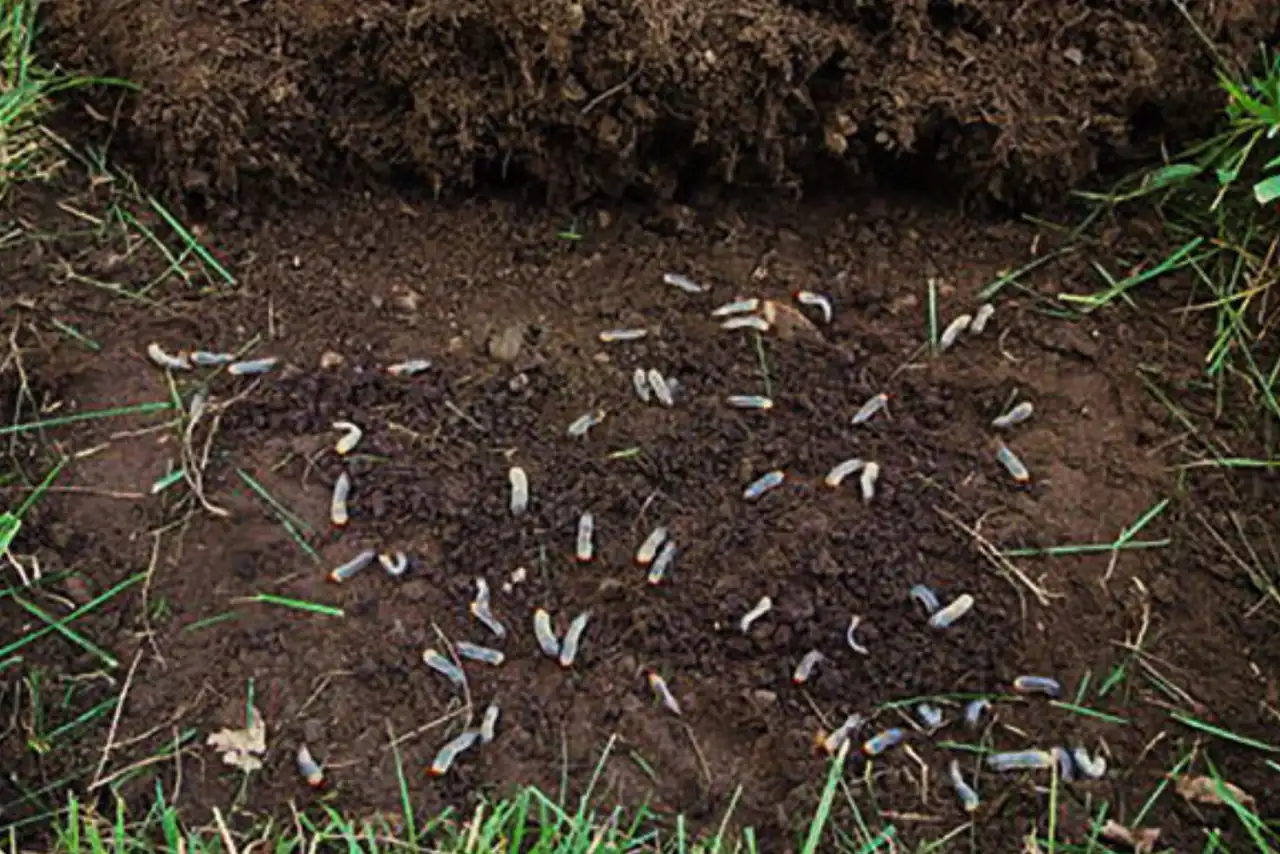
The fourth sign is the larvae themselves if you look closely. At maturity they are gray-green to brown with a distinctive inverted Y mark on the head. They feed mostly at dusk, dawn, and on cloudy days, hiding in the thatch during peak sun. Push the grass aside in suspect areas, especially near the soil surface, and look for the caterpillars.
The Soap Flush Test (Same as Chinch Bugs)
The same diagnostic that works for chinch bugs also surfaces armyworms. Mix two tablespoons of dish soap in a gallon of water, pour over a one-foot square area where you suspect activity, wait 5 minutes. Armyworms will surface and become visible. If you find 3 or more larvae per square foot, you have an active infestation that needs treatment.
What Treatment Looks Like
Active armyworm infestations respond well to a targeted insecticide labeled for armyworm control on residential lawns. The treatment is most effective when applied in the early evening when armyworms are about to come out of the thatch to feed. Water the lawn lightly before application to bring larvae closer to the surface. Then apply the product across affected areas plus a 10-foot buffer.
Active infestations stop spreading within 24 to 48 hours of treatment. Recovery of the lawn depends on how much green tissue remains. Lawns caught early with minor damage recover within 2 to 4 weeks. Lawns with severe damage may need overseeding or sodding to fill bare areas.
Prevention Strategies
Unlike grubs, armyworms cannot be reliably prevented with a single preventive application because the egg-laying moths can arrive at any time during the active season. The most effective preventive approach is monitoring and rapid response.
Walk your lawn every 3 to 4 days during the peak season (August through October). Watch for the early warning signs. Know what armyworm damage looks like. Have a treatment plan ready to execute within 24 hours of confirmation.
Some products labeled for surface insects can suppress armyworm populations as a side effect, but they are not labeled specifically for armyworm prevention. The reactive treatment approach generally produces better results than trying to apply prevention against unknown future timing.
What Happens If You Wait Too Long
Untreated armyworm infestations can strip a healthy lawn down to bare stems and crown within 3 to 5 days of becoming visible. The larvae complete their development and pupate in the soil, then emerge as adult moths to lay the next generation. Multiple waves through August, September, and October can produce cumulative damage that exceeds what a single outbreak can do.
Recovery from severe armyworm damage often takes a full season. Bermuda will refill from runners faster than other grass types but still requires significant time and proper care. Replacing sod in heavily damaged areas is sometimes faster than waiting for recovery.
What This Costs to Treat
Single application targeted treatment runs $80 to $150 for a standard residential lot. Follow-up treatment 7 to 10 days later may be needed to catch hatching eggs that survived the first application; add another $80 to $150.
Total cost to treat an active infestation: typically $160 to $300. Compare to recovery costs for untreated infestations, which can run $500 to $3,000 in sod replacement plus weeks of waiting for the lawn to recover.
Other Common Pests to Watch for in Late Summer
While armyworms are the most dramatic pest, they are not the only one. Sod webworm larvae also feed on grass at night and produce thin yellowing patches. Cutworms cause smaller individual damage but can be common in transition areas. Chinch bugs continue to be active through summer in St. Augustine and some Zoysia varieties. The general approach (weekly observation, soap flush test when in doubt, quick treatment when confirmed) applies to all of them. The biggest difference is timing: chinch bugs peak in June and July, armyworms peak in August through October.
Frequently Asked Questions
How is armyworm damage different from chinch bug damage?
Chinch bug damage starts in the hottest sunniest parts of the lawn and expands slowly. Armyworm damage can appear anywhere overnight and expands fast. The soap flush test confirms which is present.
Will birds keep the population under control?
They help, but they cannot keep up with a heavy infestation. Bird activity is a useful indicator, not a complete control method.
Can I see armyworms during the day?
Possible but harder. They hide in the thatch during peak sun. Early morning, late evening, and cloudy days are when they are most visible. The soap flush test surfaces them any time.
Do armyworms eat through the winter?
No. Populations die back with the first hard freezes (typically late October or early November in our area). Next year's population comes from new moths migrating from the south.
What Recovery Looks Like After Treatment
Recovery of armyworm-damaged Bermuda depends on how much green tissue remained when treatment stopped the spread. Light damage (less than 10 percent of the lawn affected, mostly stage one): 2 to 3 weeks of normal care brings color and density back. Moderate damage (10 to 30 percent affected): 4 to 6 weeks with deep watering, light fertilizer, and patience. Heavy damage (more than 30 percent affected): often requires sodding the worst areas plus several months of recovery. Bermuda is the most aggressive recovery grass we have, so even severe armyworm damage usually heals within a single growing season if the underlying conditions are good.
What to Do Next
If you suspect armyworm activity on your lawn, do the soap flush test today. If you find any, schedule treatment within 24 hours. Time matters more than almost any other pest we deal with.
If you would rather have a professional monitor and treat on your behalf during the active season, we offer that as part of our seasonal pest program. Call us at 405-766-7979 or visit fantasticlawn.com to schedule. We serve Edmond, North Oklahoma City, Yukon, Norman, Moore, and surrounding OKC metro communities.